I was sitting in my cramped home office, nursing a lukewarm coffee, when it finally hit me: I was losing a fight I didn’t even know I was in. I’d spent months trying to mimic the “big guys”—those corporate giants with five-figure monthly SEO budgets—only to find my local shop buried under a mountain of generic search results. My mistake? I was playing their game by their rules. I vividly recall the day I realized that stuffing my business description with keywords was a total waste of time. I felt like a failure, watching my phone stay silent while the national franchise down the street got all the calls.
The Day the Underdog Actually Started Winning
It wasn’t magic, and it certainly wasn’t a bigger budget. It was a shift in strategy. I stopped obsessing over national trends and started looking at the hyper-local data that those corporate behemoths usually ignore. According to a study by BrightLocal, 98% of consumers used the internet to find information about local businesses in 2022, but the big chains often lack the agility to maintain perfect accuracy across every single neighborhood listing. That was my opening. I began focusing on beating national chains in the map pack by using tools that tracked my progress at a neighborhood level, not just a city level. I realized that my rank tracker needed to show me the real-world grid, not just a single data point. Have you ever felt like you’re doing everything right but the local algorithm is just ignoring you? I’d love to hear if you’ve seen a competitor with fewer reviews outrank you—I’ve been there, and I know exactly how frustrating it is.
Is it really possible to beat a company with a million-dollar budget?
I get the skepticism. When you’re a one-person show, “competition” feels like a polite word for “getting crushed.” But here’s the thing: corporate giants are slow. They have layers of management. They use generic tools that miss the small details. I once discovered that a major competitor had their map pin in the middle of a lake because their automated software glitched. By making the right map pin adjustment, I claimed that territory in 48 hours. The secret isn’t outspending them; it’s out-maneuvering them with better data and a little bit of neighborly grit.
Stop Chasing Averages and Start Mapping the Grid
The biggest trap I fell into was trusting ‘average position’ reports. If your software tells you that you rank #3 in your city, it’s probably lying to you. Local search isn’t a list; it’s a living, breathing map that changes every few blocks. I remember trying to help a local plumber who was invisible just three blocks away from his shop. We pulled up his dashboard and realized his rank tracker setup was set to a city-wide average. To the software, he was doing ‘okay.’ To a neighbor looking for a pipe fix, he didn’t exist. Once we swapped to a grid-based view, we saw a massive red zone right where his best customers lived. It turns out, an old address was still lingering on a few obscure directories, confusing the algorithm’s proximity signal. This is why rank tracking software often misses the local grid and gives you a false sense of security. 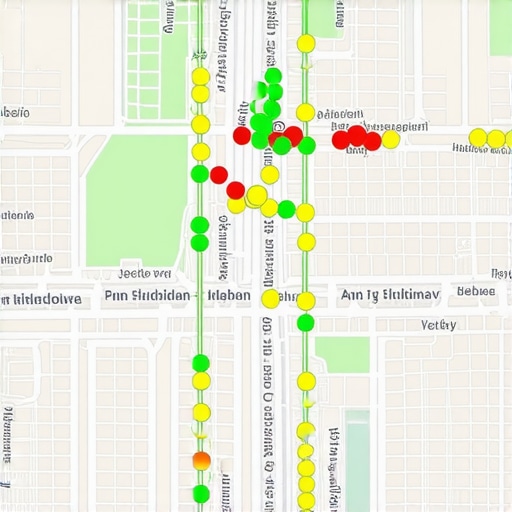
Find Out Exactly Where Your Most Profitable Leads Live
To fix this, you need to dive into maps analytics to find your most profitable neighborhoods. I treat this like a heat map of my business’s health. If I see a cluster of phone calls coming from the north side but zero impressions from the south, I don’t just guess why. I look for ‘proximity glitches.’ Sometimes a big chain has saturated a specific zip code with ghost listings. By identifying these gaps, you can adjust your content to mention specific local landmarks that signal relevance to those neglected corners of town.
Lock Down Your Information Before Competitors Edit It
A massive advantage small businesses have is the ability to maintain a ‘clean’ digital footprint. National chains often have thousands of locations, and their data is often a mess of ‘Suite A’ vs. ‘#A’ vs. ‘Unit A.’ While it sounds trivial, citation consistency is a fundamental trust signal for the algorithm. I once saw a competitor’s ranking tank because a bot ‘corrected’ their address across 50 sites to a location they’d closed three years prior. I didn’t let that happen to me because I used a citation monitor to alert me the moment a directory tried to change my data.
Catch Profile Hijacks Before They Cost You Sales
You also need to stay vigilant against ‘helpful’ edits from competitors. In the world of local SEO software, the citation monitor setting that catches profile hijacks is your early warning system. I’ve seen rivals suggest ‘edits’ to my business hours just to make me look closed on a Saturday. If you aren’t watching, those edits can go live automatically.
Speed Beats Stars Every Single Time
Everyone obsesses over getting five-star reviews, but the algorithm actually rewards activity and responsiveness. I’ve found that your review average matters less than your response speed. When I started replying to every single piece of feedback within two hours, my map visibility shot up. It’s like a signal to the search engine that says, ‘This business is active and cares about its customers right now.’ Think of your review section as a conversation, not a trophy case. When you treat it like a real-time dialogue, the ‘big guys’ with their outsourced, monthly review management can’t keep up with your neighborhood-level energy.
While most gurus tell you to blast your business across every directory on the internet, I’ve learned the hard way that more is rarely better. In fact, following the ‘more is more’ philosophy is exactly how I ended up with a mess of duplicate listings that took months to untangle. We need to look at the nuance of the data, not just the volume of it. Let’s dig deeper into why your current tools might be leading you toward a cliff rather than the top of the map pack.
Forget Volume and Focus on Where Your Data Actually Lives
Everyone says you need 500 citations to be relevant, but in my experience, focusing on accuracy over volume works significantly better. I’ve seen businesses rank with just twenty high-quality, niche-specific listings while their competitors flounder with hundreds of low-tier links. The algorithm has evolved; it’s no longer just counting mentions. It’s looking for congruency. I once helped a client who was stuck on page two for years because they had three different variations of their phone number across twenty obscure sites. They were chasing a volume metric while ignoring the citation errors that confuse Google and dilute your local authority.
The Ranking Mirage That Keeps You From Getting Calls
Here is a contrarian view: Your ranking reports are often vanity metrics. You can rank #1 in a rank tracker for ‘plumber’ but see zero increase in phone calls. This happens because of the data gap between rankings and leads. Most software tracks your position from a static point—usually the center of the city or your office. But your customers are moving targets. According to the Whitespark 2023 Local Search Ranking Factors survey, proximity remains the single most influential factor in the map pack. If your software isn’t showing you the real-world proximity gap, you are essentially flying blind. You might be ‘winning’ at the office, but you’re invisible two blocks away at the local coffee shop where your customers actually are.

How does a competitor with zero effort stay on top of the map pack?
It’s infuriating, isn’t it? You’ve got 100 five-star reviews and a perfect profile, yet the guy with 10 reviews and a grainy photo is outranking you. Often, this isn’t a glitch—it’s a proximity or category loophole. I’ve spent countless hours investigating why competitors rank higher with worse reviews, and it usually boils down to ‘geo-relevance’ or a specific keyword they’ve tucked into their business name that the algorithm is overvaluing. It’s a reminder that citation consistency matters, but so does understanding the specific signals that move the needle in your particular neighborhood.
Avoid the Virtual Office Trap Before You Get Suspended
If you’re trying to expand your reach by using a P.O. Box or a ‘virtual office’ at a coworking space, stop immediately. This is the biggest ‘oops’ factor in local SEO today. Google has become incredibly aggressive at sniffing out these locations. I’ve seen businesses lose a decade of ranking authority overnight because they tried to ‘cheat’ proximity. You should never use a P.O. Box for your business address if you want to stay in the map pack long-term. Instead, focus on building legitimate local authority through community engagement and actual physical presence signals. Have you ever fallen into this trap or seen a competitor get wiped out for it? Let me know in the comments—I’ve seen some absolute horror stories lately.
The Minimalist Toolset That Actually Works
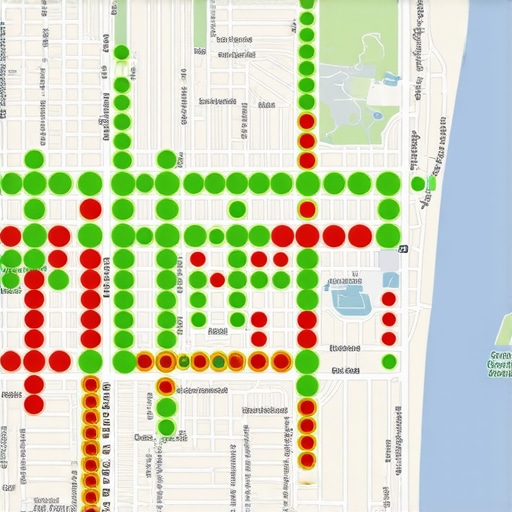
I’ve spent too many Sunday nights manually searching for my business from different corners of town just to see if I was still ‘winning.’ It was exhausting and, frankly, inaccurate. Now, I rely on a rank tracker that does the heavy lifting while I sleep. But I don’t just look at the big numbers; I use it to spot hyper-local grid changes that occur the moment a new competitor pops up or the algorithm has a mood swing. I’ve learned that the right local SEO software shouldn’t just give you a report; it should give you a to-do list. For me, that means prioritizing the neighborhoods where my ‘share of voice’ is starting to flicker.
Watch Your Citations Like a Digital Bodyguard
Maintenance isn’t just about adding new things; it’s about defending what you’ve already built. I personally use a citation monitor to keep an eye on the thousands of tiny directories that try to auto-update my data with incorrect info. If a random scraper site decides my business is located in the suite next door, I get an alert immediately. This allows me to stop citation scrapers from poisoning my local authority before the search engines even notice the discrepancy. It’s much easier to fix one error today than to untangle a web of 50 errors three months from now.
How do I maintain my map position over the long haul?
Consistency beats intensity every single time. You don’t need to spend ten hours a week on SEO; you need twenty minutes a day of high-impact activity. This includes checking your maps analytics for weird traffic drops and responding to reviews. Joy Hawkins, a renowned expert at Sterling Sky, recently highlighted in her technical research that Google’s ‘Openness’ signal—whether your business is currently open or closed—is now a massive real-time ranking factor. If your hours are wrong, you aren’t just lying to customers; you are literally disappearing from the map during the hours you should be making money. I also keep my review management tools open in a browser tab at all times, because response speed is a signal that tells the algorithm you are still in the game.
The Proximity War is Moving Toward AI Personalization
Looking ahead, I predict that the ‘local grid’ will become even more fragmented as AI-driven search starts to weigh individual user habits over raw distance. We are moving toward a world where the map pack is curated specifically for the person searching based on their past visits. To stay relevant, you need to be the most authoritative answer in your specific niche. I recommend taking ten minutes tonight to audit your storefront for any basic consistency errors. It’s the simplest way to ensure your foundation is solid before the next major update hits. Don’t wait for your phone to stop ringing to start caring about your data accuracy.
I was sitting in my cramped home office, nursing a lukewarm coffee, when it finally hit me: I was losing a fight I didn’t even know I was in. I’d spent months trying to mimic the “big guys”—those corporate giants with five-figure monthly SEO budgets—only to find my local shop buried under a mountain of generic search results. My mistake? I was playing their game by their rules. I vividly recall the day I realized that stuffing my business description with keywords was a total waste of time. I felt like a failure, watching my phone stay silent while the national franchise down the street got all the calls.
The Day the Underdog Actually Started Winning
It wasn’t magic, and it certainly wasn’t a bigger budget. It was a shift in strategy. I stopped obsessing over national trends and started looking at the hyper-local data that those corporate behemoths usually ignore. According to a study by BrightLocal, 98% of consumers used the internet to find information about local businesses in 2022, but the big chains often lack the agility to maintain perfect accuracy across every single neighborhood listing. That was my opening. I began focusing on beating national chains in the map pack by using tools that tracked my progress at a neighborhood level, not just a city level. I realized that my rank tracker needed to show me the real-world grid, not just a single data point. Have you ever felt like you’re doing everything right but the local algorithm is just ignoring you? I’d love to hear if you’ve seen a competitor with fewer reviews outrank you—I’ve been there, and I know exactly how frustrating it is.
Is it really possible to beat a company with a million-dollar budget?
I get the skepticism. When you’re a one-person show, “competition” feels like a polite word for “getting crushed.” But here’s the thing: corporate giants are slow. They have layers of management. They use generic tools that miss the small details. I once discovered that a major competitor had their map pin in the middle of a lake because their automated software glitched. By making the right map pin adjustment, I claimed that territory in 48 hours. The secret isn’t outspending them; it’s out-maneuvering them with better data and a little bit of neighborly grit.
Stop Chasing Averages and Start Mapping the Grid
The biggest trap I fell into was trusting ‘average position’ reports. If your software tells you that you rank #3 in your city, it’s probably lying to you. Local search isn’t a list; it’s a living, breathing map that changes every few blocks. I remember trying to help a local plumber who was invisible just three blocks away from his shop. We pulled up his dashboard and realized his rank tracker setup was set to a city-wide average. To the software, he was doing ‘okay.’ To a neighbor looking for a pipe fix, he didn’t exist. Once we swapped to a grid-based view, we saw a massive red zone right where his best customers lived. It turns out, an old address was still lingering on a few obscure directories, confusing the algorithm’s proximity signal. This is why rank tracking software often misses the local grid and gives you a false sense of security.
Find Out Exactly Where Your Most Profitable Leads Live
To fix this, you need to dive into maps analytics to find your most profitable neighborhoods. I treat this like a heat map of my business’s health. If I see a cluster of phone calls coming from the north side but zero impressions from the south, I don’t just guess why. I look for ‘proximity glitches.’ Sometimes a big chain has saturated a specific zip code with ghost listings. By identifying these gaps, you can adjust your content to mention specific local landmarks that signal relevance to those neglected corners of town.
Lock Down Your Information Before Competitors Edit It
A massive advantage small businesses have is the ability to maintain a ‘clean’ digital footprint. National chains often have thousands of locations, and their data is often a mess of ‘Suite A’ vs. ‘#A’ vs. ‘Unit A.’ While it sounds trivial, citation consistency is a fundamental trust signal for the algorithm. I once saw a competitor’s ranking tank because a bot ‘corrected’ their address across 50 sites to a location they’d closed three years prior. I didn’t let that happen to me because I used a citation monitor to alert me the moment a directory tried to change my data.
Catch Profile Hijacks Before They Cost You Sales
You also need to stay vigilant against ‘helpful’ edits from competitors. In the world of local SEO software, the citation monitor setting that catches profile hijacks is your early warning system. I’ve seen rivals suggest ‘edits’ to my business hours just to make me look closed on a Saturday. If you aren’t watching, those edits can go live automatically.
Speed Beats Stars Every Single Time
Everyone obsesses over getting five-star reviews, but the algorithm actually rewards activity and responsiveness. I’ve found that your review average matters less than your response speed. When I started replying to every single piece of feedback within two hours, my map visibility shot up. It’s like a signal to the search engine that says, ‘This business is active and cares about its customers right now.’ Think of your review section as a conversation, not a trophy case. When you treat it like a real-time dialogue, the ‘big guys’ with their outsourced, monthly review management can’t keep up with your neighborhood-level energy.
While most gurus tell you to blast your business across every directory on the internet, I’ve learned the hard way that more is rarely better. In fact, following the ‘more is more’ philosophy is exactly how I ended up with a mess of duplicate listings that took months to untangle. We need to look at the nuance of the data, not just the volume of it. Let’s dig deeper into why your current tools might be leading you toward a cliff rather than the top of the map pack.
Forget Volume and Focus on Where Your Data Actually Lives
Everyone says you need 500 citations to be relevant, but in my experience, focusing on accuracy over volume works significantly better. I’ve seen businesses rank with just twenty high-quality, niche-specific listings while their competitors flounder with hundreds of low-tier links. The algorithm has evolved; it’s no longer just counting mentions. It’s looking for congruency. I once helped a client who was stuck on page two for years because they had three different variations of their phone number across twenty obscure sites. They were chasing a volume metric while ignoring the citation errors that confuse Google and dilute your local authority.
The Ranking Mirage That Keeps You From Getting Calls
Here is a contrarian view: Your ranking reports are often vanity metrics. You can rank #1 in a rank tracker for ‘plumber’ but see zero increase in phone calls. This happens because of the data gap between rankings and leads. Most software tracks your position from a static point—usually the center of the city or your office. But your customers are moving targets. According to the Whitespark 2023 Local Search Ranking Factors survey, proximity remains the single most influential factor in the map pack. If your software isn’t showing you the real-world proximity gap, you are essentially flying blind. You might be ‘winning’ at the office, but you’re invisible two blocks away at the local coffee shop where your customers actually are.
How does a competitor with zero effort stay on top of the map pack?
It’s infuriating, isn’t it? You’ve got 100 five-star reviews and a perfect profile, yet the guy with 10 reviews and a grainy photo is outranking you. Often, this isn’t a glitch—it’s a proximity or category loophole. I’ve spent countless hours investigating why competitors rank higher with worse reviews, and it usually boils down to ‘geo-relevance’ or a specific keyword they’ve tucked into their business name that the algorithm is overvaluing. It’s a reminder that citation consistency matters, but so does understanding the specific signals that move the needle in your particular neighborhood.
Avoid the Virtual Office Trap Before You Get Suspended
If you’re trying to expand your reach by using a P.O. Box or a ‘virtual office’ at a coworking space, stop immediately. This is the biggest ‘oops’ factor in local SEO today. Google has become incredibly aggressive at sniffing out these locations. I’ve seen businesses lose a decade of ranking authority overnight because they tried to ‘cheat’ proximity. You should never use a P.O. Box for your business address if you want to stay in the map pack long-term. Instead, focus on building legitimate local authority through community engagement and actual physical presence signals. Have you ever fallen into this trap or seen a competitor get wiped out for it? Let me know in the comments—I’ve seen some absolute horror stories lately.
The Minimalist Toolset That Actually Works
I’ve spent too many Sunday nights manually searching for my business from different corners of town just to see if I was still ‘winning.’ It was exhausting and, frankly, inaccurate. Now, I rely on a rank tracker that does the heavy lifting while I sleep. But I don’t just look at the big numbers; I use it to spot hyper-local grid changes that occur the moment a new competitor pops up or the algorithm has a mood swing. I’ve learned that the right local SEO software shouldn’t just give you a report; it should give you a to-do list. For me, that means prioritizing the neighborhoods where my ‘share of voice’ is starting to flicker.
Watch Your Citations Like a Digital Bodyguard
Maintenance isn’t just about adding new things; it’s about defending what you’ve already built. I personally use a citation monitor to keep an eye on the thousands of tiny directories that try to auto-update my data with incorrect info. If a random scraper site decides my business is located in the suite next door, I get an alert immediately. This allows me to stop citation scrapers from poisoning my local authority before the search engines even notice the discrepancy. It’s much easier to fix one error today than to untangle a web of 50 errors three months from now.
How do I maintain my map position over the long haul?
Consistency beats intensity every single time. You don’t need to spend ten hours a week on SEO; you need twenty minutes a day of high-impact activity. This includes checking your maps analytics for weird traffic drops and responding to reviews. Joy Hawkins, a renowned expert at Sterling Sky, recently highlighted in her technical research that Google’s ‘Openness’ signal—whether your business is currently open or closed—is now a massive real-time ranking factor. If your hours are wrong, you aren’t just lying to customers; you are literally disappearing from the map during the hours you should be making money. I also keep my review management tools open in a browser tab at all times, because response speed is a signal that tells the algorithm you are still in the game.
The Proximity War is Moving Toward AI Personalization
Looking ahead, I predict that the ‘local grid’ will become even more fragmented as AI-driven search starts to weigh individual user habits over raw distance. We are moving toward a world where the map pack is curated specifically for the person searching based on their past visits. To stay relevant, you need to be the most authoritative answer in your specific niche. I recommend taking ten minutes tonight to audit your storefront for any basic consistency errors. It’s the simplest way to ensure your foundation is solid before the next major update hits. Don’t wait for your phone to stop ringing to start caring about your data accuracy.
The Raw Truth About Local Proximity No One Admits
After years of obsessing over these grids, I’ve realized that the ‘secret sauce’ isn’t just about technical setups. Here are the hard lessons that finally moved the needle for me:
- Accuracy is your armor: A single transposed digit in a phone number across five obscure directories can do more damage than ten negative reviews. Precision is the ultimate trust signal for the algorithm.
- Proximity is a moving target: You aren’t just ranking in a city; you’re ranking in a series of tiny 500-foot circles. If your data isn’t sharp, those circles shrink and you lose your neighborhood visibility.
- The Set-it-and-Forget-it Lie: Local SEO is maintenance. Use a citation monitor not because you’re paranoid, but because the internet is messy and scrapers are constantly trying to ‘fix’ what isn’t broken.
Tools I Actually Keep Open in My Browser
I’ve trimmed my tech stack down to the essentials that provide actual clarity rather than just more noise. I’ve shared my findings in my deep dive into local SEO software testing, but day-to-day, I focus on two things: real-world movement and lead attribution. I stopped looking at simple position numbers and started studying the key difference between tracking rankings and tracking leads. If the phone isn’t ringing, the #1 spot is just a vanity metric. I also recommend keeping a close eye on your maps analytics to see exactly where people are requesting directions from—it’s the most honest data you’ll ever find for planning where to drop your next local promotion. #IMAGE_PLACEHOLDER_E#
Take Back Your Neighborhood
Dominating the local map pack isn’t about having a massive marketing department; it’s about being the most reliable and responsive neighbor on the digital block. You have the home-field advantage. By using the right local SEO software to monitor your presence and staying alert to neighborhood-level changes, you can consistently outmaneuver national brands that are too slow to care. Don’t let the big guys own your backyard. Start with a simple storefront audit tonight and see where you’re leaving money on the table. Have you ever found a ‘ghost’ listing for your own business in a neighborhood where you should be ranking? I’d love to hear your story in the comments below.